My inbox has been busy lately, and not in a fun fan mail kind of way. I keep getting messages from so called book clubs, marketing agencies, and miracle publishers who are very excited about my work. They love my voice. They adore my story. They believe my book deserves to reach thousands of readers.
There is just one tiny detail.
 They need money from me first.
Sometimes it is a small processing fee to promote my book to their members. Sometimes it is a charge to create discussion questions for an author Q and A. One company wanted fifteen thousand dollars to publish and distribute a novel. They called themselves a publisher with a straight face while holding out an invoice.
Let me say this clearly for the writers in the back row.
Book clubs do not charge authors. Real publishers pay writers.
The moment money flows from the author toward the gatekeeper, you are no longer dealing with publishing. You are dealing with a vendor wearing a publishing costume.
Why So Many Writers Fall for This
I understand the temptation. Writing a book is lonely work. After months or years of typing into the void, any email that sounds enthusiastic feels like a life raft. These companies know exactly how to press on that sore spot.
They promise visibility.
They promise readers.
They promise to take the hard marketing work off your shoulders.
Hope is a powerful currency, and scammers trade in it every day.
I saw a post on Facebook this week from a writer who believed she had finally been discovered. A publisher offered her a contract, then casually mentioned a fifteen thousand dollar fee for production and distribution. She was excited instead of alarmed. That broke my heart.
The Simple Money Direction Test
There is one rule that clears up ninety percent of confusion.
In real publishing, money flows to the author.
Traditional publishers pay advances and royalties. Legitimate book clubs ask for free copies at most. Reviewers might request an ARC, but they do not send invoices.
If the first step in the relationship is you opening your wallet, you are the customer, not the talent.
Book Clubs Versus Marketing Services
A real book club is a group of readers who love stories, snacks, and strong opinions about fictional people. They might invite an  author to visit. They might choose your book because a member recommended it. None of that involves a price list.
A scam book club is usually one person with an email template and a dream of easy money. They offer guaranteed placement, guaranteed discussions, and guaranteed enthusiasm for a fee. Readers do not work that way, and genuine enthusiasm cannot be purchased by the pound.
Red Flags That Deserve Loud Sirens
- Charges to feature your book to members
- Fees to write discussion questions
- Required paid reviews before consideration
- Promises of bestseller status
- Pressure to sign quickly
- Vague contracts with lots of marketing add ons
- A publisher who behaves like a print shop
Ethical hybrid companies exist, but they are transparent about being service providers. They do not pretend to be gatekeepers of literary destiny.
Questions That Make Scammers Nervous
When one of those emails lands in my inbox, I ask a single question.
How much will this cost me?
Silence usually follows. If an answer arrives, it involves processing fees, promotional packages, or special opportunities that expire by Friday. Real opportunities do not need countdown timers.
You can also ask:
- How do you earn money from readers instead of authors?
- Can I speak with writers you did not hand pick?
- What happens if I decline paid extras?
- Who owns the ISBN and the rights?
Honest companies answer without sweating.
Protecting Your Writer Heart
I know how badly you want your book to matter. I know you imagine a circle of readers discussing your characters like old friends. Scammers know that too, and they use those dreams as bait.
Please remember this.
Your story has value even if you never pay a stranger to validate it. Real readers find books through libraries, recommendations, and genuine communities, not through invoices disguised as invitations.
If you want more guidance, I wrote earlier about the dangers of paid reviews and how they can damage your reputation:
When Your Inbox Turns into a Scam Magnet: Book Review Scams and More
.
That post explains why buying attention often costs more than money.
For reliable information about ethical publishing practices, the
Alliance of Independent Authors
offers clear advice and warnings for writers navigating the industry. You can also learn about common schemes through
Writer Beware.
A Gift From Me to You
To help you sort the good from the ugly, I created a free downloadable checklist called Is This a Publishing Scam? Quick Author Reality Check. It walks you through the money direction test, book club reality checks, contract red flags, and smart questions to ask before signing anything.
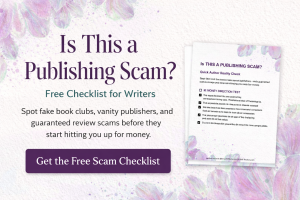
Keep it beside your laptop when those flattering emails arrive. Think of it as scam repellent with a friendly font.
Writing should not require a suit of armor, but the modern internet makes one useful. Guard your hope, protect your