Let’s just say this out loud. I am a messy writer, but I have learned that writing without editing is the way to go.
Editing while you write feels productive. It feels responsible. It feels like you are doing writing the right way. It is also one of the fastest ways to never finish anything.
 You sit down with a good idea. You start typing. Then you reread the first sentence. Then you tweak a word. Then you rewrite the second sentence three times. Then suddenly you are ten minutes in with two sentences and a growing urge to reorganize your spice cabinet instead.
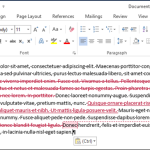
And don’t get me started on the red squiggly line that shows up and taunts you with your spelling and grammar errors.
If that sounds familiar, you are not the problem. The process is.
Why Writing Without Editing Matters for Finishing Your Work
If your goal is to actually finish what you start, then writing without editing is one of the most important habits you can build.
You cannot finish a piece that only exists in your head. You cannot develop ideas that never make it past the first paragraph. And you definitely cannot build momentum if you keep stopping every few sentences to fix what is not broken yet.
Writing without editing is not about being careless. It is about giving your thoughts room to exist before you judge them. If you want a simple breakdown of what drafting is supposed to look like, the UNC Writing Center’s drafting guide is a solid reminder that messy is normal.
Messy writing is what allows you to move forward. And moving forward is what gets you to a finished draft.
The Trap of Editing While You Write
Editing while writing feels like progress, but it is actually a stall tactic.
It slows your thinking. It interrupts your flow. It makes you second-guess ideas before they have a chance to develop.
Instead of moving forward, you stay stuck at the beginning trying to make it perfect.
And let’s be honest, perfection is a moving target. You will never catch it.
So what happens?
You don’t finish.
You don’t move forward.
You stay stuck.
This is where I am sometimes. As a teacher, it absolutely kills me to see that annoying red squiggly line in my documents. I spend so much time backspacing and fixing that I never really move forward.
It’s frustrating. Also, it is hilarious that my documents are the only place on earth where someone is allowed to correct me in real time.
What Happens When You Let It Be Messy
When you stop editing and just write, something shifts.
Your ideas come faster.
Your voice sounds more natural.
Your thoughts actually have space to develop.
You stop filtering every sentence and start thinking on the page instead of in your head.
 Some of your best lines will show up in the middle of what you thought was a throwaway paragraph. Some of your strongest ideas will only appear because you kept going instead of stopping.
Writing without editing is not about lowering your standards. It is about separating the act of creating from the act of refining. If you want a quick, practical checklist for the refining part, the Purdue OWL proofreading page is a good one to save for later.
If This Helped You, You Might Also Like
If you are stuck in the “I want to write but my brain is static” phase, you might like What to Write When You Have Nothing to Write. And if you live in the teacher brain versus writer brain battle zone, this one will make you feel seen: Teacher Brain, Writer Brain.
Finished Beats Perfect Every Time
Here is the truth most writers need to hear.
A finished draft that is a little messy will always be more valuable than a perfect paragraph that never becomes anything more.
Because once something is finished, you can:
- Revise it
- Improve it
- Share it
- Build on it
But if it never gets written, it never gets the chance to become anything at all.
Done is not the enemy of good. Done is what makes good possible.
My Rule Right Now (Sort Of)
Right now, my rule is simple.
Write first. Edit later.
Sometimes that means I write the entire piece without looking back. Sometimes I do one quick clean-up pass at the end. Sometimes I leave a sentence a little imperfect because I would rather move forward than get stuck.
And honestly, that shift has changed everything.
Because writing without editing gives me momentum. And momentum makes it possible to actually finish what I start.
But in the interest of being completely honest, this is still a work in progress. I love to edit. I literally just did it a second ago when I mistyped a word. Again, the dreaded red squiggly line got me.
A Simple Way to Try This
If you want to try writing without editing, keep it simple:
- Writing without stopping
- Don’t reread until you’re done
- Do one light edit pass after
- Ignore the dreaded red squiggly (that one is for me)
That’s it.
No overthinking. No constant backtracking. No rewriting the same sentence five times before you even know where the paragraph is going.
Let yourself get to the end first.
Final Thoughts
If you have been stuck, staring at the same page, wondering why you are not making progress, this might be the shift you need.
Let it be messy.
Let it be imperfect.
Let it be finished.
And if you take nothing else from this, take this: writing without editing is how you get words on the page so you can become the kind of writer who actually finishes.