Why Emotional Character Attachment Matters
If you’ve ever stayed up far too late reading “just one more chapter,” you already know this truth: readers do not fall in love with plots. They fall in love with characters.
Not perfect characters. Not always even likable ones. They fall in love with characters who feel real, who struggle, who make messy choices, and who matter to them on an emotional level.
 When I read Nadya Siapin’s Northwest Uprising Trilogy, I fell in love with Hope. She wasn’t a perfect Mary Sue type of character, she was real. She made mistakes, of course she did. She was stuck in a situation not of her making that nobody had ever been in before. She was making it up as she went along. She fought, she won, and she lost. She felt real to me.
When I met Lily in For Whom the Belle Tolls by Jaysea Lynn, it was love again, but different. Lily was raunchy and irreverent and didn’t take crap from anybody. The woman told God off, for crying out loud.
And don’t even get me started on Mel de Pablos’ Eve in The Last Girl on Earth. Here is someone forced to deny everything about herself just to survive. You can’t help but fall in love with a character dealing with that. All three of these books showed remarkable character attachment and that is why they stand out as superlative books.
That is where emotional character attachment comes in. When readers connect deeply to a character, everything in the story starts to hit harder. The stakes feel bigger. The heartbreak feels sharper. The victories feel sweeter. If you want a deeper look at why this happens, I talk more about that in The Psychology of Character Attachment: Why Readers Fall in Love With Fictional People.
But if you are wondering how to create that bond in your own fiction, here are seven ways it can happen.
1. Give Your Characters Something Real to Lose
Readers connect when something meaningful is at stake. That does not always mean life or death. Sometimes what matters most is much quieter than that. A character may be at risk of losing love, trust, belonging, purpose, or even the version of themselves they thought they were becoming.
When the loss matters to the character, it starts to matter to the reader too. Emotional character attachment grows when readers can feel the weight of what is on the line.
I can’t count the number of times I’ve read a book and had tears streaming down my face because of what the characters are dealing with.
2. Let Them Be Flawed in a Human Way
Perfect characters are usually not the ones readers remember. Readers connect to insecurity, doubt, fear, stubbornness,  bad timing, and the occasional terrible decision. In other words, they connect to humanity.
A flaw does not need to be dramatic. Sometimes it is a tendency to shut down when things get hard. Sometimes it is pride. Sometimes it is the habit of pushing people away before they can get hurt. Those kinds of flaws create emotional texture, and emotional texture is part of what builds emotional character attachment.
3. Show Vulnerability, Not Just Strength
Strong characters are great. Vulnerable characters are unforgettable.
Readers attach to characters when they see what hurts them, what scares them, what they wish they could say but cannot quite get out. Vulnerability does not have to look like sobbing in the rain while dramatic music swells in the background. It can be much smaller than that. A pause. A lie that protects a wound. A moment of quiet loneliness. A hope they are afraid to admit.
Those quieter moments are often where the strongest emotional bonds are built.
4. Make Their Choices Matter
One of the fastest ways to create emotional character attachment is to let your characters make choices that have consequences. Readers invest in characters when they feel that what those characters do actually matters.
If every decision leads nowhere, readers start to disconnect. But when a choice creates growth, regret, conflict, sacrifice, or change, readers lean in. They want to know what that choice will cost and whether the character can carry it.
That is where attachment deepens. People care more when they are emotionally invested in outcomes.
5. Let Them Change
Characters do not need to become completely different people by the end of a story, but they should move. They should learn something, confront something, accept something, or challenge something in themselves.
Growth gives readers a sense of payoff. It tells them their emotional investment meant something. Even a small internal shift can make a character feel more alive and more memorable.
If readers can see where a character started and where they ended, they are much more likely to carry that character with them long after the book is over.
6. Stop Trying to Make Them Too Manageable
Sometimes characters fall flat because we are controlling them too tightly. We want them to fit the plot, say the right thing, behave on cue, and stay in neat little boxes. Unfortunately, that often makes them feel less like people and more like cardboard employees trapped in a story meeting they did not ask to attend.
Sometimes the strongest characters are the ones who push back a little. If that sounds familiar, you might enjoy What to Do When Your Characters Won’t Behave: Taming the Uncooperative Cast in Fiction.
When you allow your characters a little room to surprise you, they often become more authentic on the page. Authenticity is one of the biggest drivers of emotional character attachment.
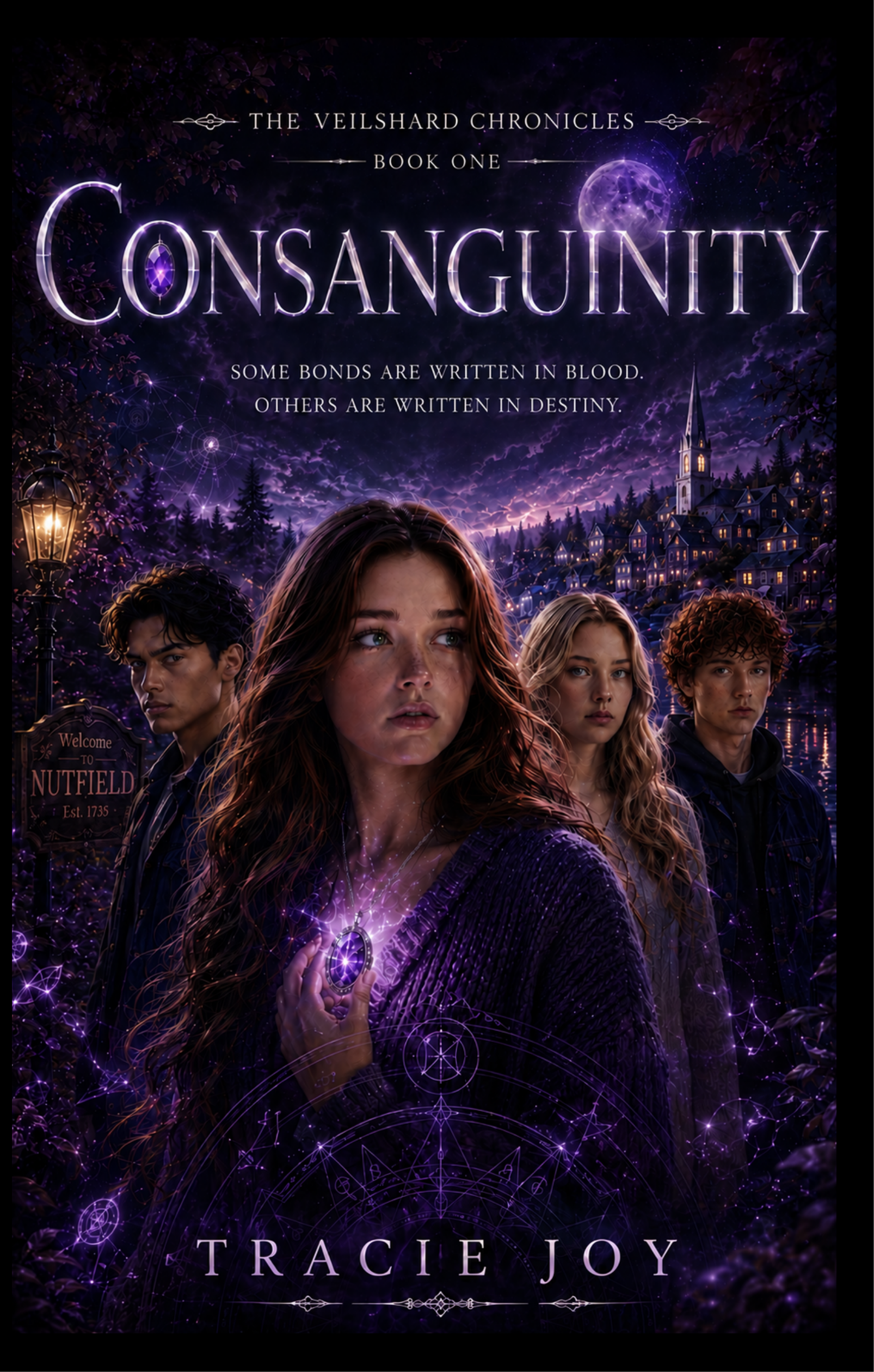
I’m actually struggling with this right now in Consanguinity. J.T. is not behaving the way I want him to. Part of me is thinking, “How rude.” Another part of me is saying, “Come on, Tracie. Just let the poor kid do what he wants to do.”
7. Focus on Emotion, Not Just Action
Plot is important, of course. Things need to happen. But action alone does not create connection. Emotion does.
 Do not just show what happened. Show what it meant. Show how your character interpreted it, feared it, resisted it, or changed because of it. Readers do not simply want events. They want emotional experience.
That is one reason strong writing resources, including advice from Writer’s Digest, often stress the importance of emotional depth in fiction. Readers remember characters who make them feel something.
The Common Mistake Writers Make
A lot of writers think they need to make a character impressive in order to make them memorable. So they make them beautiful, brilliant, talented, fearless, or admired by everyone in the room.
But impressive is not the same thing as emotionally compelling. But impressive is not the same thing as emotionally compelling. It’s also not very realistic, or very interesting. Readers don’t want perfection. They want connection.
Readers do not need perfection. They need honesty. They need contradiction. They need fear and hope and longing and weakness and courage all tangled up together in a way that feels recognizably human.
That is what creates emotional character attachment. Not polish. Not performance. Connection.
Final Thoughts on Emotional Character Attachment
If you want readers to care about your story, give them someone to care about.
Not someone perfect. Not someone larger than life. Just someone real enough that readers forget, for a little while, that they are fictional.
That is the power of emotional character attachment. It is what makes readers stay up too late, turn one more page, and carry your characters around in their hearts long after the story ends.
And honestly, that is the dream, isn’t it?