The Moment I Realized I Was Rushing My Story
Story pacing in writing isn’t something I was thinking about at 2:00 in the morning… but apparently, my brain was. I was sound asleep, dreaming. I don’t know what I was dreaming but I know it was good because my dreams usually are.  And then, it happened
I woke up out of nowhere with that feeling. You know the one. Not panic exactly, but something close. Like your brain is trying to tap you on the shoulder and say, “Hey… we need to talk.”
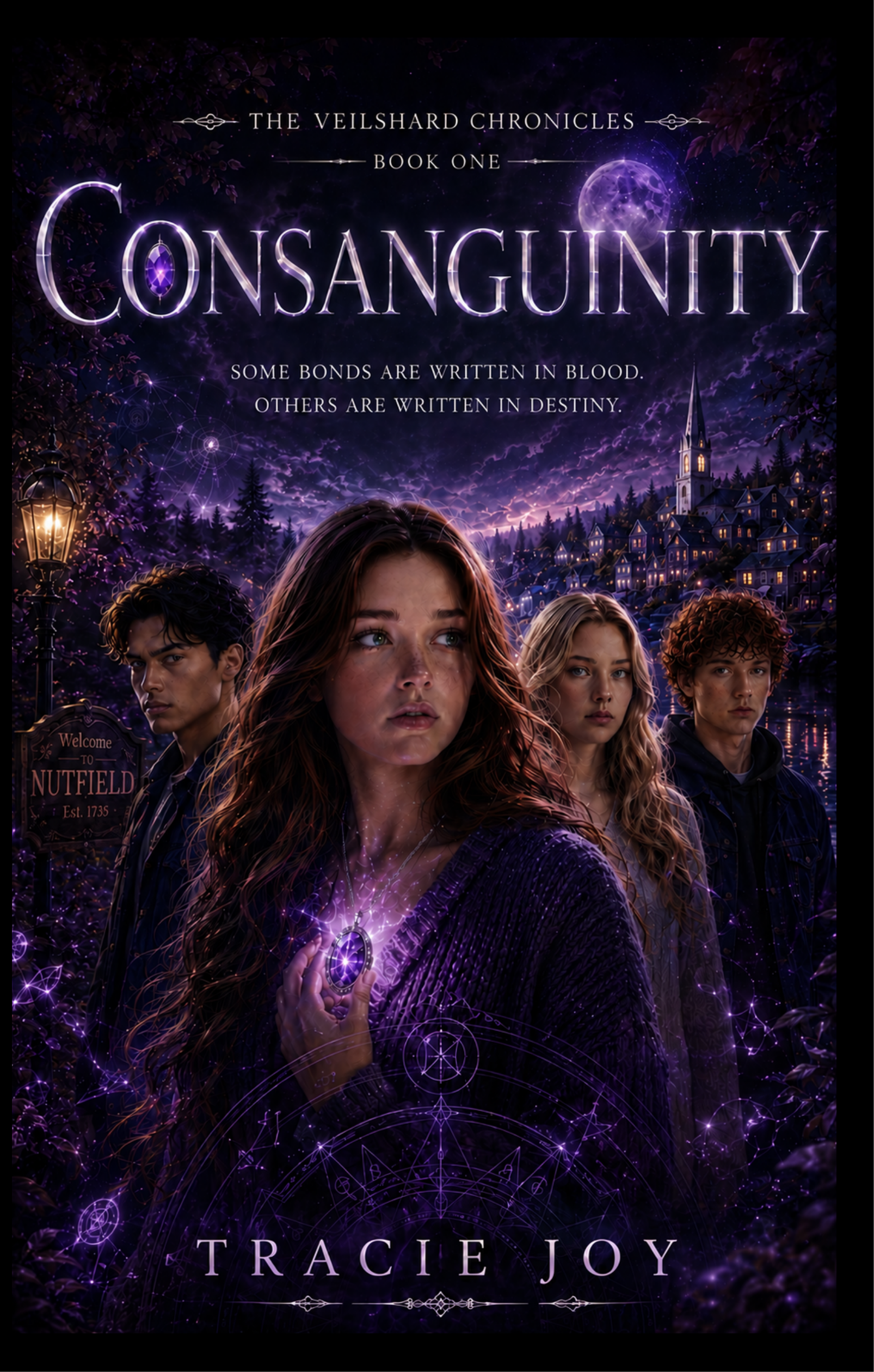
And there it was. I was rushing my story. Mind you, I certainly didn’t wake up with that exact thought in my mind. It was more like a “What if I do this, instead of that, change this, move that there, and add this,” and boom, I had completely changed the trajectory of Consanguinity. My muse has very definite ideas at 2:00 in the morning apparently. While I’m glad she was working on story pacing while I was sleeping, she really could have waited to share those thoughts until a more respectable time.
The Original Plan
Up until that moment, I had a clear structure in mind. Four main characters. Four pieces of the Veilshard (name pending). One big story.
And my plan? My plan was pretty simple. I was going to have them all find their pieces in Consanguinity. It made sense. It felt efficient. It moved things along quickly. On paper, it worked. Personally, I thought it was perfect. I even had plans, well as many book plans as I ever make, for the next 3 books. However, my subconscious apparently wasn’t happy with that and had other other ideas for my book.
The 2 A.M. Realization
Somewhere between sleep and awake, my brain, my subconscious, my muse, my whatever you want to call it decided it was time to speak up. Fix the story pacing!
If they find everything in Book One… what’s left? Where’s the build? Where’s the tension? Where’s the space for each character to grow into what they’re meant to become? I tried to argue with my muse, but that bitch one.
I had taken something that should unfold… and tried to compress it. I was rushing it.And suddenly, I could see it clearly. I wasn’t building a journey. I was rushing to the end.
Slowing the Story Down
That was the shift.
Not a complete rewrite. Not throwing everything out. But a structural change that changed everything.
 Instead of all four pieces of the Veilshard appearing in Book One…They unfold across all four books. One piece at a time. One character arc at a time. One layer of the story revealed when it’s ready, not when it’s convenient. And just like that, the story had room to breathe.
The cool thing about all of this is those other plans I had made for the other 3 books still worked, I just needed to shift things around a little. However, since I had to work, I didn’t do any of that planning right then and there, because sleep is like a sacred thing to me. What I did do was grab my phone, open the notes app, and type up a couple of quick notes, complete with a bazillion typos because it was 2:00 in the morning, and I was still half asleep.
What I Learned About Story Pacing in Writing
Here’s the thing about story pacing in writing: faster isn’t always better. Sometimes when we rush, it’s not because the story needs it… it’s because we’re excited. Or impatient. Or worried we’ll lose momentum if we don’t get to the “good parts” quickly. But the truth? The good parts are the build.
The tension. The waiting. The moments where things almost happen. That’s where readers fall in love with your story.
If you’re looking for more general writing structure tips, resources like Reedsy’s guide to story structure can be helpful, but sometimes the biggest lessons come from simply listening to your own story.
This was a huge change for me from my fan fiction writing. Those stories moved fast. Yes there was tension, yes their was a build up to it, but it was still boom, boom, boom. It worked for fan fiction, but I really don’t think it’s going to fly in this book.
When Your Story Pushes Back
I didn’t sit down and logically outline this change. My muse pushed back. It said, “Hey, my way is better. You’re moving way too fast.”
And this time, I listened. So if something in your writing feels off, even if you can’t quite explain it yet…
Don’t ignore that feeling. That’s not doubt. That’s instinct. Trust it! Getting the story pacing right in writing a book isn’t easy, but it is something you want to work at. It really does make all the difference.
If You’re Feeling Stuck
Just because I don’t want you waking up at 2:00 in the morning questioning every single pacing decision you’ve ever made, I put together something that actually helps in the moment. This story pacing worksheet gives you a quick, practical way to figure out if you need to slow down, speed up, or stay right where you are… without the existential spiral. Use it while you’re writing, after a draft, or when something just feels off. Ideally? You fix it on the page… and then go to bed like a normal, well-rested human. I also have a full collection of free writing resources that can help you get moving again.
Sometimes all it takes is one small shift.
And sometimes?
It takes waking up at 2:00 in the morning and finally listening.