There’s something people don’t talk about enough when it comes to healing after trauma. The anxiety that lives in you after can be so overwhelming.
Everyone expects you to be okay once the “big thing” is over.
After the diagnosis. After the loss. After the fear. After the moment that changed everything.
From the outside, you might look fine. You’re functioning. You’re moving forward. You’re doing what you’re supposed to do.
 But inside?
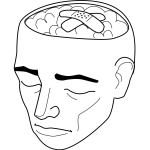
Every ache feels louder. Every silence feels heavier. Every small change makes your brain pause and ask:
But inside?
Every ache feels louder. Every silence feels heavier. Every small change makes your brain pause and ask:
 But healing after trauma anxiety does not follow a neat timeline. There is no emotional calendar that says, “Congratulations, your fear expires next Thursday.” Although honestly, that would be convenient.
If your anxiety feels bigger than the moment you are in, it does not mean you are broken. It means your brain remembers. It means your body is trying to keep you safe. It means you went through something real enough to leave an imprint.
There is nothing irrational about a nervous system that learned the hard way that life can change quickly.
If this feeling of always waiting for something to go wrong sounds familiar, you might also connect with my post on holding two true emotions at once. Sometimes healing means learning that gratitude and fear can sit in the same room without one canceling the other out.
But healing after trauma anxiety does not follow a neat timeline. There is no emotional calendar that says, “Congratulations, your fear expires next Thursday.” Although honestly, that would be convenient.
If your anxiety feels bigger than the moment you are in, it does not mean you are broken. It means your brain remembers. It means your body is trying to keep you safe. It means you went through something real enough to leave an imprint.
There is nothing irrational about a nervous system that learned the hard way that life can change quickly.
If this feeling of always waiting for something to go wrong sounds familiar, you might also connect with my post on holding two true emotions at once. Sometimes healing means learning that gratitude and fear can sit in the same room without one canceling the other out.
 Every symptom feels important. Every change feels suspicious. Every sensation feels like it might mean something more.
A twinge becomes a warning. A headache becomes a question. Shortness of breath becomes a full internal courtroom where your brain is both prosecutor and dramatic witness. And yes, it is important to listen to your body. Ignoring real symptoms is not the goal.
But it is also important not to let every moment become an emergency. Sometimes a pain is just a pain. Sometimes a tired day is just a tired day. Sometimes your body is not sending a warning. Sometimes it is just being a body, which frankly is a noisy little machine with questionable customer service.
Healing means learning the difference between paying attention and panicking.
For more information on how trauma can affect the body and mind, the National Institute of Mental Health offers helpful information on coping after traumatic events.
Every symptom feels important. Every change feels suspicious. Every sensation feels like it might mean something more.
A twinge becomes a warning. A headache becomes a question. Shortness of breath becomes a full internal courtroom where your brain is both prosecutor and dramatic witness. And yes, it is important to listen to your body. Ignoring real symptoms is not the goal.
But it is also important not to let every moment become an emergency. Sometimes a pain is just a pain. Sometimes a tired day is just a tired day. Sometimes your body is not sending a warning. Sometimes it is just being a body, which frankly is a noisy little machine with questionable customer service.
Healing means learning the difference between paying attention and panicking.
For more information on how trauma can affect the body and mind, the National Institute of Mental Health offers helpful information on coping after traumatic events.
But inside?
Every ache feels louder. Every silence feels heavier. Every small change makes your brain pause and ask:
Is this it again?That fear can feel frustrating, exhausting, and sometimes even embarrassing. You may wonder why you can’t just relax. You may tell yourself you should be over it by now. But healing does not work like flipping a switch. Trauma changes the way we notice the world, and sometimes the hardest part of healing is learning how to live without letting fear run the whole show.
Why Healing After Trauma Anxiety Feels Like Constant Waiting
When you go through something traumatic, your brain does not just forget it once it is over. It learns. It adapts. It becomes more alert to patterns, more aware of changes, and more sensitive to anything that might signal danger. That is not weakness. That is survival. Your brain is trying to protect you by making sure you never get blindsided the same way again. The problem is that sometimes the alarm keeps ringing even when there is no immediate danger. That is why so many people experience that quiet, constant feeling of waiting. Waiting for something to go wrong. Waiting for bad news. Waiting for the other shoe to drop. And the hard truth is that feeling can stick around long after the actual danger has passed.You Are Not Overreacting, You Are Responding
One of the most damaging things we tell ourselves after trauma is this:I should be over this by now.
But healing after trauma anxiety does not follow a neat timeline. There is no emotional calendar that says, “Congratulations, your fear expires next Thursday.” Although honestly, that would be convenient.
If your anxiety feels bigger than the moment you are in, it does not mean you are broken. It means your brain remembers. It means your body is trying to keep you safe. It means you went through something real enough to leave an imprint.
There is nothing irrational about a nervous system that learned the hard way that life can change quickly.
If this feeling of always waiting for something to go wrong sounds familiar, you might also connect with my post on holding two true emotions at once. Sometimes healing means learning that gratitude and fear can sit in the same room without one canceling the other out.
The Balance Between Awareness and Fear
Here is where healing after trauma anxiety gets tricky. The awareness itself is not the problem. The problem is when that awareness turns into constant fear that takes over your daily life. Because while part of you is scanning for danger, another part of your life is quietly happening right now. And it deserves your attention too. You are allowed to notice the twinge. You are allowed to have the thought. You are allowed to feel the fear. But you do not have to live inside it. That is the difference between awareness and surrender. Awareness says, “I am noticing this.” Fear says, “This is all I can think about now.” Healing asks us to pause in that tiny space between the thought and the spiral.When Your Body Feels Like a Question Mark
For many people, especially after a serious illness or health scare, the body can start to feel like something you cannot fully trust anymore.Every symptom feels important. Every change feels suspicious. Every sensation feels like it might mean something more.
A twinge becomes a warning. A headache becomes a question. Shortness of breath becomes a full internal courtroom where your brain is both prosecutor and dramatic witness. And yes, it is important to listen to your body. Ignoring real symptoms is not the goal.
But it is also important not to let every moment become an emergency. Sometimes a pain is just a pain. Sometimes a tired day is just a tired day. Sometimes your body is not sending a warning. Sometimes it is just being a body, which frankly is a noisy little machine with questionable customer service.
Healing means learning the difference between paying attention and panicking.
For more information on how trauma can affect the body and mind, the National Institute of Mental Health offers helpful information on coping after traumatic events.
How to Live Without Letting Fear Take Over
This is not about pretending everything is fine. It is about learning how to hold two truths at once:- You went through something difficult.
- You are still allowed to live fully now.
I am having a fear response right now. That does not mean something is wrong. It means I am scared.That tiny shift matters. It separates the feeling from the fact. Fear says, “Something bad is happening.” Awareness says, “I am afraid something bad might happen.” Those are not the same thing. If the fear keeps interfering with your life, it is also okay to ask for help. Talking with a doctor, therapist, or trusted support person is not weakness. It is maintenance. We do not shame cars for needing tune-ups, and cars do not even have childhood memories or medical portals.
You Can Be Grateful and Still Be Scared
One of the hardest parts of healing after trauma anxiety is the guilt that can come with fear. You may think:- I should just be thankful.
- Other people have it worse.
- I survived, so why am I still scared?
- Why can’t I just enjoy my life?