The Campfire Arc: A Gentle Way to Understand Story Shape
When writers first start learning about story shape, it is easy to become overwhelmed.
Three-act structure. Hero’s Journey. Save the Cat. Seven-point story structure. Story circles. Beat sheets.
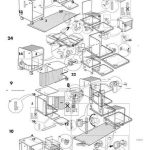 Suddenly, writing starts to feel less like storytelling and more like assembling furniture from a set of confusing instructions. Yes, Ikea, we’re talking about your instructions! The good news is that most story structures are describing the same basic thing. At its heart, every story has a shape. Not a rigid formula. Not a checklist. A shape.
In The Cozy Writer’s Guide to Story Structure, we talked about structure as support instead of restriction. Today, let’s make that idea even simpler.
I like to think of it as the campfire arc because long before books, movies, and writing blogs existed, people were gathering around fires and telling stories. Oral storytelling has been one of humanity’s oldest ways of sharing knowledge, memory, art, and meaning. You can read more about the history of oral tradition from Britannica.
Those early stories varied wildly in their details, but many shared the same underlying pattern. Someone begins in one place. Something changes. They struggle. They learn. They emerge different than before. That is the campfire arc. Pretty much what you’ve been doing all along, as a writer.
Stories Begin with a Normal
Every story starts with some version of normal. This does not mean life is perfect. In fact, many protagonists begin  their stories dissatisfied, lonely, frustrated, or stuck. What matters is that they have an established reality. A farm boy lives on a desert planet. He finds a droid with a hidden message, he….oh never mind, that’s been done already.
A baker runs her family’s shop. A detective works another routine case. A teenager tries to survive high school. Whatever the situation, readers need a starting point before they can appreciate change. Think of it as the “before” picture.
Then Something Disrupts the Normal
At some point, life refuses to stay the same. An invitation arrives. A mystery appears. A new person enters the picture. A disaster strikes. A secret is revealed. This moment is often what launches the story forward. It creates a question that demands an answer.
What happens next?
Without disruption, there is no movement. Without movement, there is no story.
The Middle Is Where Growth Happens
This is the part many writers fear. The middle. The place where characters make mistakes, encounter obstacles, suffer  setbacks, and occasionally create entirely new problems for themselves. From a structural standpoint, the middle exists for one reason:
Transformation.
If the beginning establishes who the character is, the middle challenges that identity. They learn new skills. They gain allies. They lose confidence. They discover strengths they did not know they possessed. They fail. They try again. The details vary from story to story, but the purpose remains remarkably consistent. The character cannot become who they need to be without the experiences that happen in the middle.
The Ending Reflects the Journey
A satisfying ending is not simply the point where the story stops. It is the moment when readers can clearly see the difference between who the character was and who they have become. Sometimes the change is dramatic. Sometimes it is subtle.
A fearful character finds courage. A lonely character finds belonging. A stubborn character learns trust. A grieving character finds hope. The external plot may involve defeating villains, solving mysteries, winning competitions, or saving kingdoms. The emotional journey underneath often matters just as much.
Readers remember how a story made them feel.
Why This Matters More Than Complex Structure Systems
There is absolutely nothing wrong with studying formal story structures. Many writers find them incredibly helpful.
However, it is easy to become so focused on getting the structure “right” that we forget what those systems are trying to accomplish. Most of them are simply different ways of describing the same natural storytelling pattern.
A beginning. A disruption. A struggle. A change. A new normal.
When you understand that story shape, many structural concepts become easier to grasp because you can see the purpose behind them. The labels matter less than the movement.
Trust the Shape
One of the reasons I love thinking about stories as campfire arcs is that it feels less intimidating.
Human beings have been telling stories for thousands of years. Most of those storytellers never studied beat sheets  or plot diagrams. They understood instinctively that people want to hear about change. We are fascinated by journeys, growth, challenges, and transformation because those things reflect our own lives. When your draft feels messy, it can help to step back and ask a simple question:
How is my character changing?
The answer often reveals the shape of the story. And once you can see the shape, finding your way forward becomes much easier.
Final Thoughts
Story shape does not have to be complicated. Before there were writing craft books and online courses, there were storytellers sitting around campfires sharing tales about people facing challenges and returning changed.
That basic pattern still works today.
Whether you are writing fantasy, romance, mystery, historical fiction, or literary fiction, readers are looking for movement. They want to witness transformation. The details are yours to invent. The shape is as old as storytelling itself.