How to Be a Beta Reader Authors Will Thank
One of the greatest gifts you can give an author is your time.
When you agree to beta read a manuscript, you’re stepping into a role that’s part reader, part detective, and part coach. Your job isn’t to edit the book  or rewrite it. Your job is to help the author see what they can’t see because they’ve been living inside the story for months, or sometimes years.
As I wrapped up the beta reading process for my own novel, I realized something. There are countless articles telling writers how to receive feedback, but very few explaining what makes feedback genuinely helpful in the first place.
Whether you’re reading for a friend, volunteering in a writing group, or offering professional beta reading services, here are a few principles that can make your feedback far more valuable.
Read the Whole Story Before Judging It
Whenever possible, finish the manuscript before diving into detailed criticism.
Stories are designed to unfold over time. A scene that feels unnecessary in Chapter Three may become essential in Chapter Twenty. A character who seems flat early on may have an incredible growth arc. A mystery that appears unresolved may simply be waiting for its payoff.
It’s perfectly fine to jot down notes as you read. In fact, you should. Just be careful about declaring something “doesn’t work” until you’ve seen where the author is taking you.
Answer the Questions the Author Asked
Many authors send beta readers a short list of questions.
- Was the pacing too slow?
- Did any characters feel unrealistic?
- Were you confused anywhere?
- Did the ending satisfy you?
Start there.
If an author is asking about pacing, they probably don’t need a page of comments about comma placement. Focus on the areas where they’re actively seeking help before expanding into other observations.
Explain Why Something Isn’t Working
“I didn’t like this.”
 That’s honest, but it isn’t especially useful.
Instead, explain what pulled you out of the story.
Maybe a character’s reaction didn’t feel earned. Maybe dialogue sounded unnatural. Maybe you were confused about who was speaking. Maybe a scene dragged because the conflict stalled.
Authors can solve problems much more easily when they understand why a reader stumbled.
Tell Authors What Is Working
One of the biggest misconceptions about beta reading is that your only job is finding flaws.
Not true.
If a character made you laugh, say so. If a scene made you cry, mention it. If you stayed up until midnight because you couldn’t stop reading, definitely tell the author.
Positive feedback isn’t about flattery. It helps authors recognize the strengths they should protect during revisions.
Respect the Author’s Voice
Every story has its own personality.
A beta reader’s goal isn’t to make every novel sound like the kind of book they would write.
Instead of asking, “How would I write this?” ask, “Is the author accomplishing what they’re trying to accomplish?”
Those are very different questions.
Be Honest About Your Experience
You don’t have to be a published author to be a wonderful beta reader. You don’t need an English degree. You don’t even need to know every grammar rule.
What you do need is honesty.
Tell authors whether you’re reading simply as an avid reader, as another writer, or as someone with professional editing or beta reading experience. Setting expectations early helps everyone understand the perspective you’re bringing.
If You Charge for Beta Reading, Say So Up Front
Professional beta readers provide a valuable service, and there is absolutely nothing wrong with charging for your time and expertise.
 Reading an entire manuscript thoughtfully takes many hours, and experienced beta readers deserve to be compensated if that’s the service they offer.
The key is transparency.
If you’re a paid beta reader, make that clear before you begin reading. Let the author decide whether your services fit their budget.
What isn’t fair is agreeing to beta read a manuscript as a volunteer, reading a chapter or two, and then asking for payment before continuing. By then, the author has already invested time in the relationship and is expecting feedback based on the original agreement.
Many indie authors simply don’t have the budget for professional beta readers. Between editing, cover design, formatting, ISBNs, software, advertising, and countless other publishing expenses, every dollar matters.
Whether you beta read for free or for a fee, professionalism begins with honesty.
Remember What Your Job Really Is
A beta reader isn’t trying to create a perfect book.
They’re helping an author create their best book.
That means offering thoughtful observations instead of rewriting scenes, asking questions instead of making demands, and remembering that every comment should move the story forward rather than simply reflect personal taste.
The best beta readers don’t just find problems.
They help authors see possibilities.
And that’s a gift every writer remembers.
Five Questions Every Beta Reader Should Answer
- Where were you bored or tempted to skim?
- Where were you confused?
- Who was your favorite character, and why?
- Did anything feel unrealistic or inconsistent?
- Did you spot any plot holes or continuity errors?
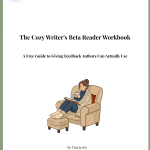 Download my free Beta Reader Checklist! Whether you’re an author preparing your manuscript for beta readers or a reader looking for an organized way to record your thoughts, this free printable has you covered. It includes the five essential questions every beta reader should answer, along with additional prompts to encourage thoughtful, constructive feedback that authors can actually use.
Final Thoughts for Authors and Beta Readers
Before asking someone else to read your work, make sure you’ve completed your own revisions first. My three-pass revision process is a simple way to polish your manuscript before it reaches your beta readers.
If you’re unsure how beta reading differs from developmental editing, copyediting, or proofreading, the Editorial Freelancers Association’s editorial service definitions provide a helpful overview of the different services available to authors.