Turning Dreams Into Stories: How to Use Your Subconscious for Writing Inspiration
Where do you find your writing inspiration? How about your dreams? Have you ever woken up from a dream convinced you had just experienced the greatest story ever told? Maybe there was an unforgettable character, a mysterious setting, or a conversation that felt so real you could still hear the voices.
Then, five minutes later, all you could remember was something about a purple cat driving a school bus.
Our dreams have a funny way of slipping through our fingers, but every now and then they leave behind a spark worth holding onto. While dreams rarely hand us a complete novel, they can offer emotions, images, and ideas that grow into something much larger.
Your Brain Never Really Stops Creating
Even while you’re asleep, your brain is busy making connections. It sorts through memories, emotions, experiences, and random bits of information from your day. Sometimes those pieces come together in strange ways, but occasionally they form something that feels surprisingly meaningful.
 That’s one of the reasons dreams can be such wonderful sources of writing inspiration. They aren’t following the rules of logic or plot structure. They’re simply exploring possibilities.
As writers, that’s exactly what we’re trying to do.
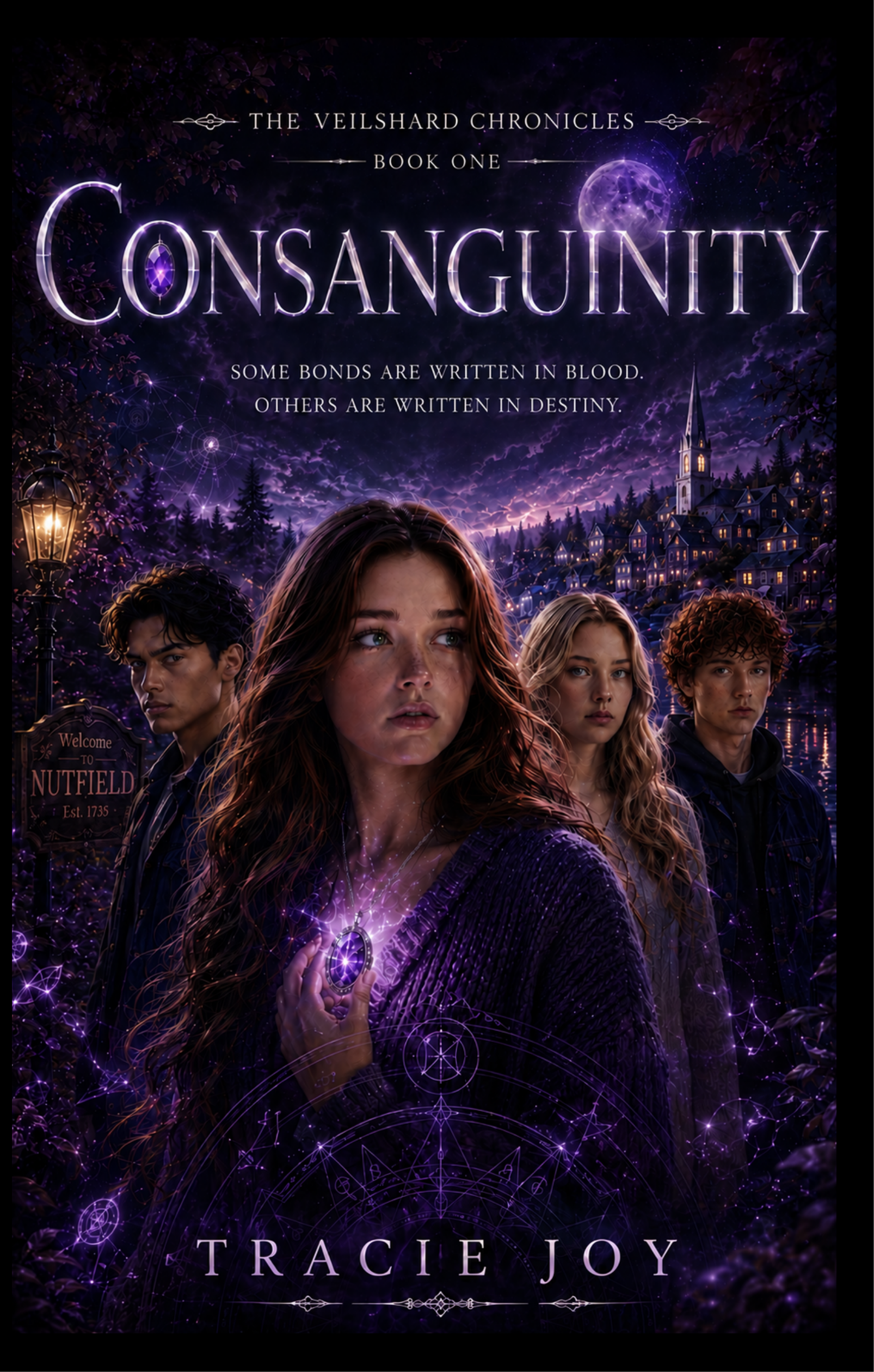
The other night, I had a dream about the characters in my book, and I woke up thinking, “Nope, that would never happen.” Followed quickly by an “Oh, wait, that might!” As an author, I take my writing inspiration where I can find it, and if it’s in my dreams, so be it!
In fact, it wasn’t too long ago, I woke up in the middle of the night and realized that I was rushing the pacing of my story. One simple moment in a dream turned my book into a four book series!
Look for the Spark, Not the Whole Story
One of the biggest mistakes writers make is expecting inspiration to arrive fully formed.
Most dreams won’t give you an entire novel complete with a beginning, middle, and end. Instead, they offer fragments:
- A character you can’t stop thinking about.
- A haunting setting.
- A single line of dialogue.
- An unusual relationship.
- An emotion that stays with you long after you’ve woken up.
Those small pieces are often far more valuable than an entire dream. They leave room for your imagination to do the rest. Think of dreams as seeds rather than finished stories.
Capture the idea before it fades
Dreams disappear quickly. If you wake up thinking, “I’ll remember this later,” there’s a good chance you won’t. Keep a  notebook or your phone nearby and jot down whatever you remember. Don’t worry about making it neat or logical. Half-asleep notes are often hilarious to read later, but they can contain exactly the detail you needed.
Write down colors, feelings, snippets of dialogue, or even a single image. You can always make sense of it after you’ve had your morning tea.
Let the Dream Inspire, Not Control
Once you’ve written down your dream, ask yourself a few simple questions.
- What emotion made this memorable?
- What if this happened to someone else?
- Why did this scene feel important?
- What would happen next?
These questions transform a dream from something you experienced into something your readers can experience. The dream provides the inspiration. You provide the story.
Inspiration Doesn’t Have to Follow a Schedule
One of the wonderful things about writing is that inspiration shows up in unexpected places. Sometimes it arrives during a walk. Sometimes while listening to music, and sometimes while reading history or having a conversation with  a friend. And sometimes it arrives at three o’clock in the morning wearing pajamas and speaking complete nonsense.
The important thing isn’t where the inspiration comes from. It’s that you’re willing to notice it when it appears.
If you’ve ever worried that your creative process doesn’t look like someone else’s, remember that every writer works differently. Some write detailed outlines. Others discover the story as they go. Some find ideas through research, while others stumble across them in dreams.
The pace and path of your creativity are uniquely yours. If you’ve ever struggled with comparing your writing process to someone else’s, you may enjoy reading my article on creative writing pace, where I explore why there’s no single “right” way to create.
Trust the Quiet Moments
Not every dream becomes a novel. Most won’t. But every once in a while, your subconscious hands you an image or an idea that refuses to let go. Those are the moments worth paying attention to.
Writing inspiration doesn’t always arrive while you’re sitting at your keyboard. Sometimes it finds you while you’re asleep, quietly reminding you that your imagination is always working, even when you aren’t.
So the next time you wake up with a story lingering just out of reach, don’t dismiss it. Write it down. You never know which tiny dream might become your next unforgettable story. For more information about how dreaming supports memory and creativity, the Sleep Foundation offers an interesting overview of what happens while we sleep.
Have you ever dreamed a story, a character, or a scene that stayed with you? I’d love to hear about it in the comments!