Well, this was not how I expected my Sunday to go.
Like most indie authors, I have developed the rather unhealthy habit of checking my book sales, rankings, and reviews more frequently than any reasonable human being should. It’s practically an Olympic sport at this point.
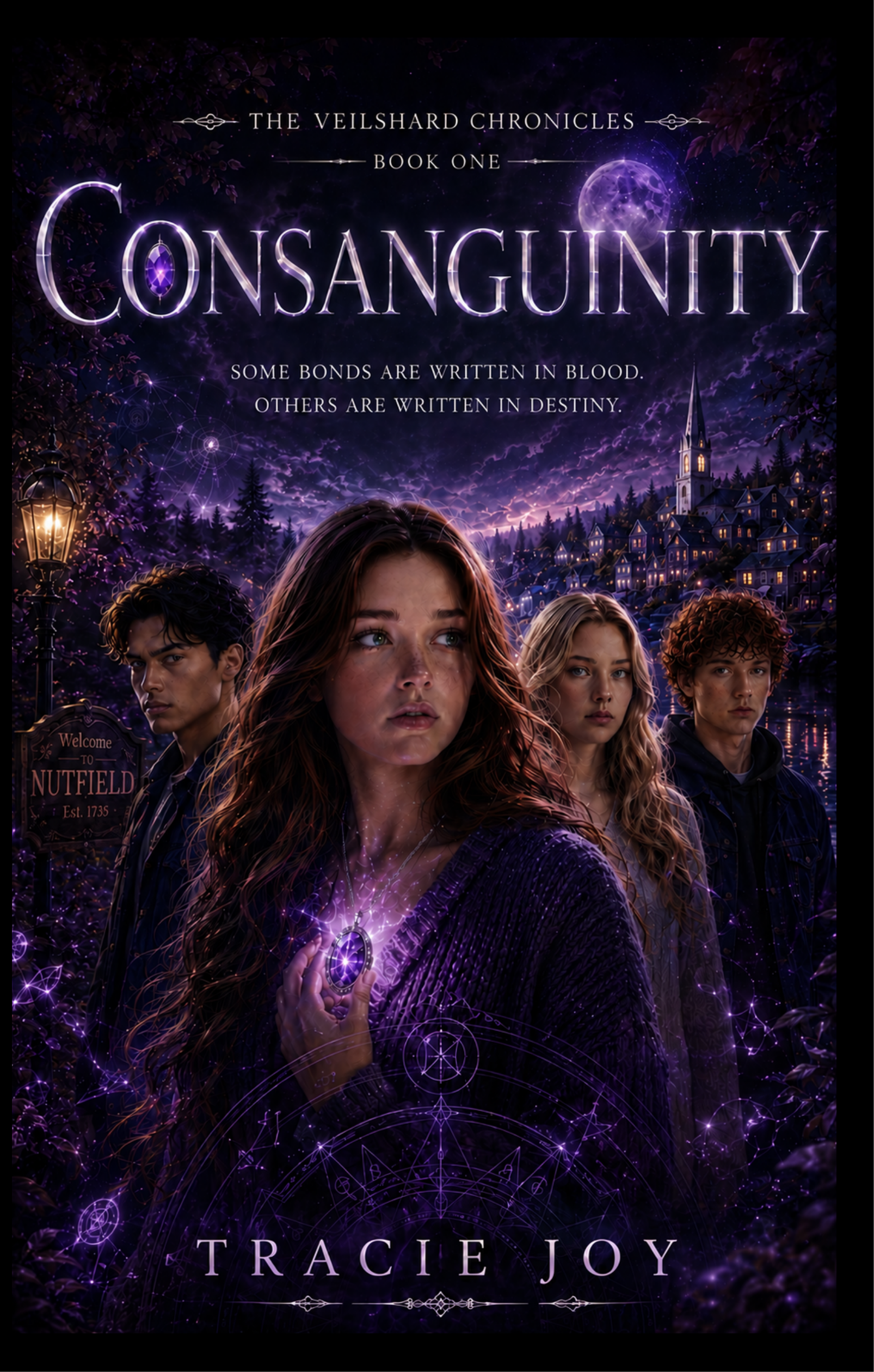
 So when I received an email from NetGalley informing me that someone had submitted feedback for Consanguinity, my debut young adult paranormal fantasy novel, I was excited. Finally! Another review!
And then I saw it. One star.
Ouch. Nobody enjoys a one-star review. I certainly don’t. But I also understand that publishing a book means putting something you’ve worked incredibly hard on into the world and allowing complete strangers to have opinions about it. Some people will love your characters. Others will hate them. Some will adore your plot twists, while others will see them coming from three chapters away. That’s how reading works, and I can live with that.
What I wasn’t prepared for was a one-star review that had absolutely nothing to say about my novel.
The Review That Wasn’t About the Book
Here is the entire explanation the reviewer provided:
Realized after the fact that the cover is AI generated, so I can’t rate this more than 1 star. I don’t support AI art covers!
That’s it. No discussion of the plot. No mention of the characters. No critique of the writing, pacing, dialogue, or  worldbuilding. Just the cover.
The reviewer also marked the book as did not finish on Goodreads. Now, I have no idea how much of the novel this person actually read. Maybe it was five pages. Maybe it was fifty. Maybe it was almost the entire book. I don’t know, and I’m not going to pretend otherwise.
But I do know what the reviewer said: the one-star rating was based on the cover. And that’s where I have a problem.
Here’s the Part That Really Gets Me
I hired a cover designer.
When I decided to publish Consanguinity, I knew I needed a cover that would capture the atmosphere of the story. Something mysterious. Something supernatural. Something that hinted at the world my characters were about to discover.
So I did what independent authors are routinely encouraged to do. I hired a professional.
I found a designer on Fiverr offering fantasy book cover design services. I commissioned a cover for both the ebook  and paperback editions, paid for the work, and even left a generous tip because I appreciated the effort. I didn’t sit down with an AI image generator and create the cover myself. I hired someone to do the job.
Can I personally verify every tool or technique the designer used? No. And I’m not going to claim otherwise. But here’s the thing: neither can a reviewer determine the entire creative process simply by looking at the finished cover. At least not with the certainty this review expressed.
And yet, based on that conclusion, my novel received one star. Not my cover. My novel. The story I spent countless hours writing, revising, editing, and preparing for publication. That distinction matters.
Let’s Talk About AI Art for a Minute
Before anyone starts sharpening their pitchforks, I understand that AI-generated artwork is controversial. There are legitimate concerns about copyright, consent, compensation, and the ways generative AI may affect working artists. Those concerns deserve serious attention, and I completely respect a reader’s decision not to purchase or read books featuring AI-generated artwork.
But here’s where this gets particularly interesting. On September 30, I published a blog post called I Use AI. It Doesn’t Write My Books. In it, I talked about ethical AI use, the difference between using technology as a tool and allowing it to replace human creativity, and the increasingly troubling tendency to accuse writers and artists of using AI based on assumptions rather than evidence.
I even devoted an entire section to the AI witch hunts happening in creative communities. My argument was simple: suspicion is not evidence. Just because something looks AI-generated doesn’t mean we know how it was created, and using AI for one purpose doesn’t mean someone used it for everything.
And now, less than two weeks later, here I am. Writing another blog post because someone decided my professionally commissioned book cover was AI-generated and gave my novel one star because of it.
Apparently, I should have knocked on wood when I wrote that first article.
For the record, I do use AI in certain aspects of my work, and I’ve never hidden that fact. I use it to help with marketing, brainstorming, website management, and some of the approximately 4,782 other jobs that come with being an independent author. But I write my own books, and I hired a designer to create my cover. Those distinctions matter.
What happens when someone assumes artwork is AI-generated and makes a public judgment based on that assumption? What happens when an author hires a designer in good faith, only to find that the finished product has become the basis for a negative rating of an entirely separate creative work?
And perhaps most importantly, what happens when the rating tells potential readers nothing about the actual story?
Because that’s what happened here. And it’s precisely the kind of situation I was concerned about when I wrote that earlier article.
Those Little Stars Matter
Let me tell you something about being an indie author. We do a ridiculous amount of work.
First, we write the book. Then we rewrite the book. Then we edit the book. Then we edit it again because apparently we enjoy torturing ourselves. We format it, proofread it, create covers, write descriptions, research publishing platforms, 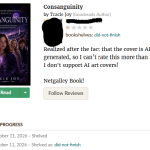 upload files, fix formatting disasters, and inevitably discover a typo thirty seconds after publication.
Then comes the marketing. Oh, sweet merciful heavens, the marketing.
Social media posts. Reels. TikToks. Newsletters. Blog posts. Book promotions. Advertising campaigns. Website maintenance. And somewhere in the middle of all this, we’re supposed to find time to write the next book. Because sleep is apparently optional.
For most of us, reviews are incredibly important. They provide social proof. They help prospective readers decide whether to take a chance on an unfamiliar author. They give us feedback about what worked and what didn’t. And when you don’t have a major publishing house behind you, every review feels significant.
I’m not suggesting that readers owe indie authors five-star ratings. They absolutely do not. A thoughtful three-star review can be valuable. Even a one-star review can be useful when it explains why a reader didn’t enjoy a book.
Maybe the pacing was too slow. Maybe the characters weren’t believable. Maybe the plot was confusing or the ending disappointing. Those are things an author can consider.
But what am I supposed to learn from a one-star review based solely on the cover? That someone doesn’t like what they believe is AI artwork? Okay. I understand that.
But what did you think of my book? I still have no idea.
Is Everything About a Book Fair Game?
Now, here’s where I want to be fair. Some readers believe that everything associated with a book is part of the reading experience. The cover. The marketing. The publisher. The author’s public statements. The ethical decisions behind production. And I can understand that perspective.
Books don’t exist in a vacuum. If a reader strongly opposes a particular publishing practice, that may influence whether they want to support a book. Fair enough.
But I think there’s a difference between saying, “I chose not to finish this book because I object to its cover,” and assigning the lowest possible rating to a novel without offering any evaluation of the writing. One explains a personal decision. The other contributes to a public rating that readers may interpret as a judgment of the story.
Are readers allowed to do that? Of course. Am I allowed to question whether it’s fair? Absolutely. And that’s what I’m doing.
Why I Reported the Review
Yes, I reported the review to Goodreads. Not because I think negative reviews should be deleted. Not because I believe authors should be protected from criticism. And certainly not because I expect everyone to love Consanguinity.
I reported it because the reviewer explicitly stated that the rating was based on the cover rather than the content of the novel. I believe that’s a reasonable distinction to ask a review platform to consider.
Goodreads may disagree. Its policies may permit ratings based on a reader’s broader experience with a book, including its presentation. And if that’s the decision, so be it.
I’m not interested in starting a fight with the reviewer. I’m not naming the person, linking to the profile, or encouraging anyone to track them down. This isn’t about punishing someone for having an opinion. It’s about asking whether our review systems are actually helping readers evaluate books.
The Most Frustrating Part
I put Consanguinity on NetGalley because I wanted honest reader feedback. I wanted to know whether people connected with Aisling and her friends. Whether the mystery of the Veilshard intrigued them. Whether the supernatural elements worked. Whether they laughed at the right moments, worried about the characters, or finished the book wanting to know what happened next.
And yes, I wanted to know what didn’t work. Because despite what some people might think, authors can learn from criticism. We may not always enjoy it. We may occasionally need chocolate, caffeine, or a few choice swear words before processing it. But thoughtful criticism has value.
This review gave me none of that. Instead, I received a one-star rating based on an assertion about artwork I had commissioned from someone else. And that is incredibly disappointing.
And About That Cover…
Here’s something the reviewer probably doesn’t know. I’ve actually been working on a possible redesign of Consanguinity’s cover.
Not because of this review.
The process started before I ever received that one-star rating. I’ve always loved the overall concept of my cover, but there were certain details, particularly the way some of my characters were portrayed, that never quite matched the people I see in my head.
And when you’ve spent as much time with fictional characters as I have, you get a little particular about what they look like. Trust me, J.T. and Eric have opinions.
So I’ve been experimenting with a different approach, exploring ways to make the cover feel more realistic and better reflect the story I’ve written.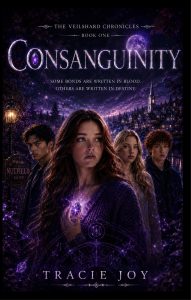
But if I do, it will be because I want a cover that better represents my vision, not because someone gave my novel one star.
And frankly, that’s how creative decisions should be made.
So, Can We Talk About This?
I’m genuinely curious what readers and fellow authors think. Should a book’s star rating reflect the story between its covers? Or should it encompass everything associated with the publication, including the cover, the production process, and the reader’s ethical objections?
And if we’re going to judge creative work based on how we believe it was made, shouldn’t we first establish whether that belief is accurate?
I don’t expect everyone to agree with me. That’s fine. I welcome thoughtful disagreement. What I don’t welcome is the idea that assumptions should automatically become facts, particularly when those assumptions affect someone else’s work.
I hired a designer because I wanted a professional cover for my novel. I trusted the service I purchased. And I spent a tremendous amount of time creating the story behind that cover.
I’m not asking anyone to compromise their principles. I’m not asking anyone to give my novel a rating it hasn’t earned. I’m asking for something much simpler.
If you’re going to judge my writing, please read my writing.
Because there’s an entire story behind that cover. And I worked pretty damn hard to write it.
What do you think? Should a book’s cover influence its star rating? Is an objection to a publishing practice a fair reason to give a novel one star? I’d love to hear from readers, reviewers, and fellow indie authors.
Let’s have a conversation. Respectfully, of course. We can disagree without bringing out the literary pitchforks.
And YES, I used AI to make the feature image for this blog post!