The Intuitive Writer’s Guide to Drafting: Why Your First Draft Isn’t Supposed to Make Sense
If you’ve ever reached the middle of a first draft and thought, This story is a mess, congratulations. You’re probably  doing it right.
One of the biggest misconceptions about writing is that a first draft should resemble a finished book. We sit down with an idea, start putting words on the page, and secretly expect those words to arrive in neat, organized chapters with perfect pacing and flawless character development.
That is rarely how creativity works. A first draft is not a finished product. It is a process of discovery. Trust me. Mine is a mess!
The Purpose of a First Draft
Many writers approach drafting as if they are building a house. Every board must be measured correctly. Every wall must be straight. Every detail must be planned before construction begins. For intuitive writers, a first draft often feels more like exploring a forest.
You know roughly where you’re going. You may have a destination in mind. But the path reveals itself one step at a time. Sometimes you discover a character who becomes far more important than you expected. Sometimes a scene appears out of nowhere and changes the direction of the story. Sometimes you realize halfway through that your original plan wasn’t the right one at all. None of that means the draft is failing. It means the story is revealing itself.
Messy Doesn’t Mean Bad
One of the most damaging habits writers develop is confusing unfinished with poor quality.
A first draft may contain:
- Plot holes
- Missing scenes
- Flat dialogue
- Contradictions
- Placeholder descriptions
- Notes to yourself in brackets
- Characters whose names change three times
None of these things indicate failure. They indicate that you’re drafting. Professional authors produce messy first drafts. Bestselling authors produce messy first drafts. Writers with dozens of published books still create drafts that need revision.
The difference is that experienced writers understand the draft is only one stage of the process.
Discovery Happens During Writing
Some stories simply cannot be outlined into existence. You may think you know your protagonist until they react  differently than expected. You may believe two characters are destined to be friends until they start arguing on the page. You may discover the emotional heart of your story in Chapter Fifteen rather than Chapter One. These moments often feel inconvenient while drafting, but they are frequently where the strongest storytelling emerges.
The story is teaching you what it wants to become.
If you prefer a more intuitive approach to drafting, you may also enjoy my article The Compass, Not a Map: A Different Approach to Writing First Drafts.
Give Yourself Permission to Be Incomplete
Many writers stall because they keep trying to fix today’s problems before tomorrow’s pages exist. They rewrite Chapter One twenty times. They adjust the opening paragraph for a week. They obsess over a piece of dialogue that may not survive the next revision anyway. Meanwhile, the rest of the story remains unwritten.
When you’re drafting, forward momentum is usually more valuable than perfection. If you don’t know the exact description, leave a note. If you need to research something later, leave a note. If a scene isn’t working, do your best and keep moving. Future You can solve those problems. Present You needs to finish the story.
The Draft Is Not the Destination
Think of your first draft as raw material. A sculptor doesn’t expect a block of marble to look like a finished statue. A  painter doesn’t expect the first sketch to belong in a gallery. A writer shouldn’t expect a first draft to be publication-ready. The draft exists so you have something to shape, refine, and improve.
You cannot edit a blank page. You cannot strengthen a scene that doesn’t exist. You cannot polish a story that has never been written. I had to have a firm talk with myself about this. “Self I said…” Seriously I had to just let go and let the spelling mistakes, the typos, and the poorly written scenes be and finish the book. It was so hard, but now that I’m in the editing process, I’m finding that it’s so much easier to fix those poorly written scenes.
Trust the Process
Author Anne Lamott famously wrote about the importance of “shitty first drafts,” reminding writers that rough, imperfect beginnings are a normal part of the creative process. If your draft currently feels chaotic, inconsistent, or 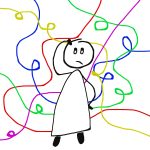 incomplete, take heart. That doesn’t mean you’re failing. It means you’re in the middle of creating something.
Stories rarely emerge fully formed. They grow through layers of drafting, revising, editing, and refinement. The first draft’s only real job is to exist. Everything else comes later.
So if you’re staring at a manuscript full of plot holes, awkward scenes, and notes that say “fix this later,” you’re not doing anything wrong. You’re writing. And that’s exactly where every finished book begins.