When did publishing a book mean surrendering the right to have an opinion about someone else’s?
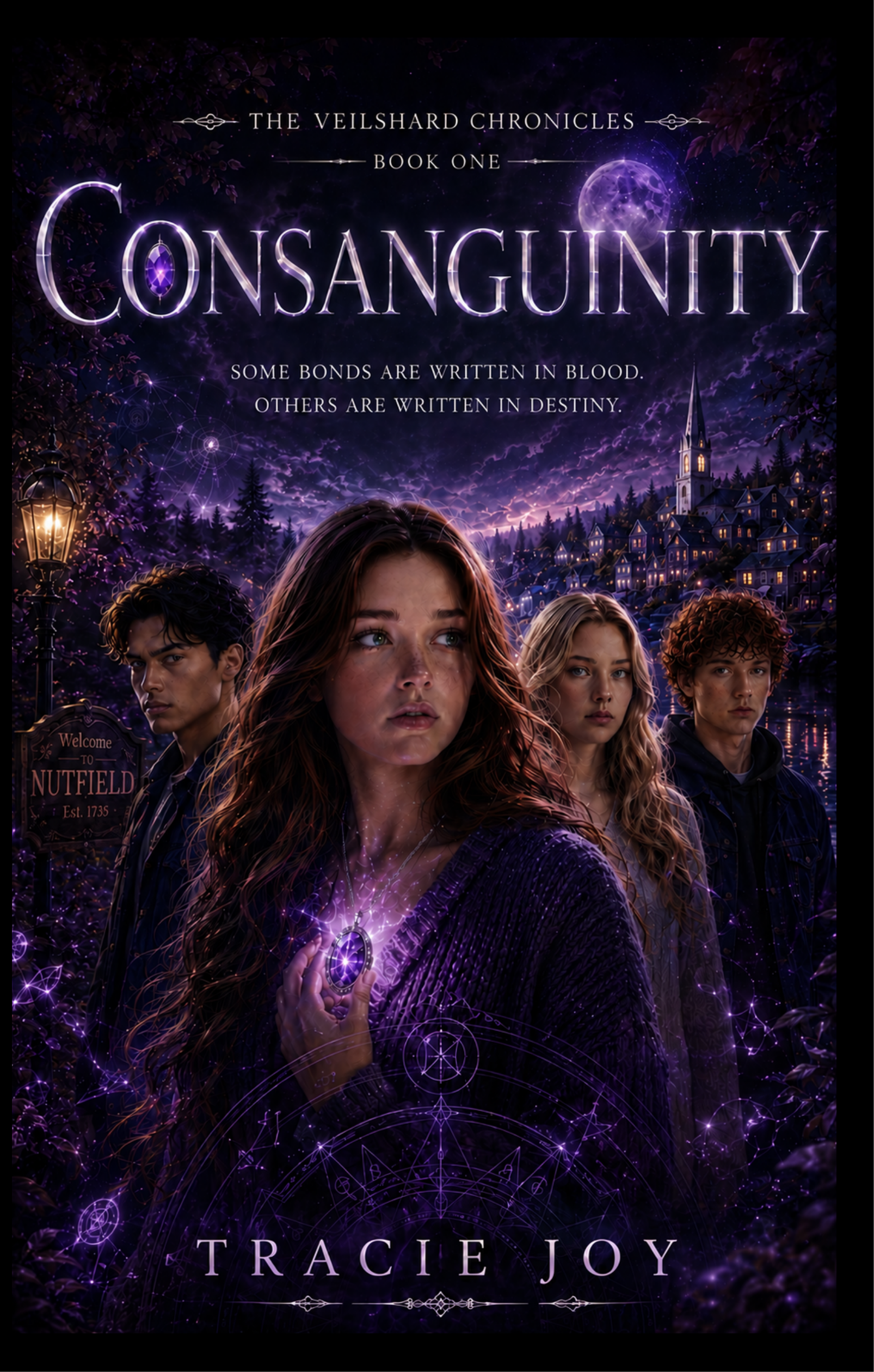
I’ve been reviewing books online for a couple of years. Long before I published my debut novel, Consanguinity, I was reading books, writing about them, and sharing my opinions with anyone  interested enough to listen. Okay, most people probably weren’t interested enough to listen, but that didn’t shut me up.
I’ve reviewed books I adored. Books I enjoyed but didn’t love. Books that kept me awake far past any reasonable bedtime. And yes, books that disappointed me.
Because that’s what readers do.
We read. We think. We form opinions. Sometimes we even have the audacity to share them. It’s me, I’m the one with the audacity.
Then, in August 2026, I published my first novel.
Apparently, I missed the fine print.
Somewhere between uploading my manuscript, approving my cover, and clicking that magical little Publish button, I evidently surrendered my right to review other people’s books.
At least, that’s what someone recently declared during an online discussion.
Authors shouldn’t review books. Period.
Not merely that authors should avoid malicious reviews. Not that authors should disclose conflicts of interest. Not even that authors should think carefully before publicly criticizing their professional peers.
Nope. Authors shouldn’t review books. At all.
I’m sorry. What?
Excuse Me While I Retrieve My Eyeballs From the Back of My Head
Let’s examine the breathtaking absurdity of this proposition.
Before I published a novel, my opinions about books were apparently perfectly acceptable. I could discuss character development, pacing, world-building, dialogue, and plot construction  without anyone questioning whether I had the right to do so.
But now that I’ve written and published a book of my own, those same opinions are somehow inappropriate? Did publishing Consanguinity alter my reading comprehension? Did my ability to recognize compelling characterization spontaneously evaporate? Did Amazon send a secret notification informing me that my reader privileges had been permanently suspended? Because I certainly didn’t receive that email. And believe me, I’ve received plenty of emails from Amazon. For their sake, I hope not because I spend a lot of money on books!
The idea that becoming an author somehow disqualifies a person from reviewing books is not merely unreasonable. It fundamentally misunderstands the relationship between reading and writing.
Authors don’t stop being readers when they become writers. Most of us became writers precisely because we loved reading in the first place.
Writers Have Been Criticizing Other Writers for Centuries
Perhaps someone should inform literary history that authors aren’t supposed to review books.
Edgar Allan Poe was both a fiction writer and a literary critic. Virginia Woolf wrote novels and  essays examining literature. George Orwell produced fiction alongside some of the twentieth century’s most influential literary criticism.
And somehow, civilization survived.
Imagine telling Virginia Woolf that because she’d published Mrs. Dalloway, she was no longer qualified to express an opinion about anyone else’s writing. I suspect the resulting essay would have been magnificent.
Literary criticism has never been the exclusive territory of people who have never written a book. Writers have spent centuries studying, discussing, praising, challenging, and occasionally eviscerating one another’s work.
Of course, writing a formal literary essay isn’t identical to posting a review on Goodreads, Amazon, or a personal blog. Different platforms have different purposes and rules. But the underlying principle remains: writing books does not automatically invalidate someone’s ability to evaluate them.
If anything, writing a novel has given me a greater appreciation for the work involved. I know how difficult it can be to build a believable character, untangle a stubborn plot, or revise a chapter for the seventeenth time because something still isn’t quite right.
That experience doesn’t make me incapable of evaluating a book. It makes me more aware of the craft behind it.
Should Authors Review Books? Ethics vs. Gatekeeping
Now, before someone enthusiastically misinterprets everything I’ve just written, let’s establish something important. There are legitimate ethical concerns surrounding authors reviewing other authors.
If an author deliberately posts a dishonest negative review to damage a competitor’s reputation, that’s unethical. If two authors arrange to exchange glowing reviews regardless of what they actually think, that’s unethical. If someone conceals a relationship that materially affects their recommendation, that can undermine the credibility of the review.
And if a platform prohibits certain reviews because of conflicts of interest, those rules matter.
The National Book Critics Circle’s discussion of reviewing ethics shows that questions about professional relationships and conflicts of interest are worth examining carefully. The issue is how to review responsibly—not whether everyone who writes books must remain silent.
Unethical reviewing is the problem. Being an author is not.
We don’t prohibit teachers from discussing education because they work in schools. We don’t insist that chefs stop reviewing restaurants because they know how to cook. We don’t tell musicians they must never evaluate another musician’s performance.
We recognize that professional knowledge can provide valuable perspective while also acknowledging that conflicts of interest sometimes require disclosure or restraint. Why should authors be treated differently?
A published novelist who writes a thoughtful, honest review isn’t automatically engaging in professional sabotage. Sometimes she’s simply a woman who finished a book and has something to say about it.
Imagine that.
The Curious Contradiction of Supporting Indie Authors
Here’s where this argument becomes particularly irritating.
Independent authors are constantly encouraged to support one another. Read indie books! Promote fellow writers! Share recommendations! Help readers discover new voices! Leave reviews, because reviews matter! All perfectly reasonable advice. I’ve even written about supporting independent authors myself.
But apparently, once you’ve published your own book, you’re supposed to support fellow authors while carefully avoiding the act of publicly evaluating their work. How, exactly, is that supposed to function? Am I allowed to recommend a book if I enjoyed it? Can I write a blog post explaining why I loved the characters? What if I discuss the author’s world-building? At what point does an enthusiastic recommendation become a forbidden review?
Is there a committee that determines how many adjectives I’m permitted to use before I’ve  crossed the line? Because if we’re going to invent arbitrary restrictions, I’d appreciate a handbook. Preferably one with footnotes. Though not too many footnotes please. I’m also working on an M.A. in History and I’m pretty much footnoted out!
The indie publishing community benefits when readers discover books through genuine enthusiasm, thoughtful commentary, and honest recommendations. And yes, some of those readers happen to be authors themselves.
Disqualifying their voices simply because they’ve published their own work would remove people who are often deeply invested in reading, discussing, and supporting books. That doesn’t strengthen the literary community. It makes the conversation smaller.
A Review Is an Opinion, Not a Declaration of War
Somewhere along the way, we’ve developed an unfortunate tendency to treat disagreement as hostility. A reader who doesn’t enjoy a book isn’t necessarily attacking its author. A reviewer who points out pacing problems isn’t automatically being cruel. And an author who expresses a critical opinion about another author’s work isn’t necessarily attempting to destroy someone’s career. Sometimes a book simply doesn’t work for a particular reader. That’s allowed.
I write young adult supernatural fantasy. I know perfectly well that Consanguinity isn’t going to appeal to everyone. Some readers will love my characters. Others won’t connect with them. Some will enjoy the mystery and mythology. Others may prefer a faster pace, a different narrative style, or an entirely different genre. Would I prefer everyone to love my book? Of course. I’m an author, not a saint. (Please love my book and review it – OFTEN.) But I don’t believe someone loses the right to express an honest opinion simply because that opinion might disappoint me.
There’s a difference between constructive criticism and cruelty. There’s a difference between an honest reaction and a personal attack. And there is certainly a difference between reviewing a book and attacking the human being who wrote it.
Those distinctions matter far more than whether the reviewer has an ISBN of her own.
Apparently, Experience Is Now a Disqualification
What bothers me most about this entire notion is the assumption lurking beneath it: that an author cannot be trusted to review another author’s work fairly simply because they’re also an author.
It presumes dishonesty without evidence. It treats professional experience as an inherent conflict. And it implies that once someone enters a creative field, their opinions about that field become automatically suspect.
That’s an extraordinary standard. By that reasoning, the people who understand the work most intimately should be the least welcome to discuss it.
Now, does being an author mean my reviews are automatically more insightful than those written by someone who has never published a book? Absolutely not. In fact, my reviews are more along the lines of I like it, here’s why. I’m pretty basic if the truth be told.
Readers bring different experiences, expectations, preferences, and perspectives to every story. A lifelong reader who has never written a sentence of fiction may offer observations that a bestselling novelist completely overlooks.
That’s one of the wonderful things about discussing books. We don’t all see the same things. We don’t all enjoy the same things. And we shouldn’t have to.
I Was a Reader Before I Was an Author
I’ve spent years reading books and sharing my thoughts about them. I didn’t start reviewing books as a marketing strategy for Consanguinity. I didn’t suddenly develop an interest in literature after publishing my novel. Reading was already part of my life. Reviewing was already something I enjoyed.
Publishing my own work didn’t change that. It added another dimension to my relationship with books, certainly. But I still experience stories as a reader.
I still get attached to characters. I still become frustrated with plot developments. I still celebrate a beautifully written passage, mourn the end of a wonderful series, and occasionally 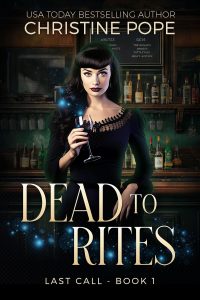 stare at a disappointing ending wondering what on earth just happened. And I still want to talk about those experiences.
My recent review of Dead to Rites is part of that same reading life. Publishing my own novel didn’t make me stop loving other people’s stories. Why shouldn’t I discuss them? Because someone has decided that authors ought to remain silent?
No, thank you.
Why Authors Should Still Be Allowed to Review Books
I’m perfectly willing to discuss ethical reviewing practices. I’m happy to acknowledge conflicts of interest, professional courtesy, and the responsibility that comes with publicly evaluating another person’s creative work.
 Those are worthwhile conversations. The Goodreads author guidelines, for example, offer a useful reminder that authors participating in reading communities have responsibilities as well as voices.
But a blanket declaration that authors shouldn’t review books? Absolutely not. It’s an oversimplified solution to a problem that requires judgment, honesty, and common sense.
Being published doesn’t make someone incapable of fairness. Being unpublished doesn’t guarantee objectivity. And having written a novel certainly doesn’t mean a person must surrender the pleasure of discussing someone else’s.
I was a reader long before I became a published author. I intend to remain one for the rest of my life.
And if I finish a book tomorrow and have something thoughtful, enthusiastic, disappointed, or even mildly exasperated to say about it, I reserve the right to say it. Ethically. Honestly. And in my own voice. Because publishing a book didn’t revoke my reader card.
And anyone who thinks otherwise is welcome to explain exactly which chapter of the imaginary Author Rulebook says it did.
I’ll wait.
Preferably with a good book.
What do you think? Should publishing a book change whether someone can review other authors’ work? I’d genuinely love to hear your reasoning—even if you disagree.