The Curiosity Gap in Writing: 7 Ways to Keep Readers Hooked
Have you ever told yourself, I’ll read one more chapter and then I’m going to bed? And then suddenly it’s 1:37 a.m., you have to get up in

five hours, and you’re negotiating with yourself like this is a perfectly reasonable life choice.
One more chapter.
That, my writerly friends, is the curiosity gap in writing at work. The curiosity gap is the space between what readers know and what they desperately want to know. When writers create that space effectively, readers feel an almost irresistible need to close it. They need the answer. They need to know what happens next. They need to know why that character is acting suspiciously. And yes, they will sacrifice sleep to find out.
As writers, we can absolutely use this. Not because we are evil. Probably. Okay we’re evil, but it’s the good kind of evil.
What Is the Curiosity Gap in Writing?
The curiosity gap happens when you give readers enough information to create a question but not enough information to answer it.
That distinction matters.
Simply withholding information doesn’t automatically create suspense. If readers don’t know there is something worth discovering, there’s no reason for them to keep reading. You have to give them a breadcrumb. Then another. Then perhaps one more. But absolutely do not hand them the entire loaf of bread. Imagine a character receives a mysterious letter.
If you write:
Sarah received a letter and put it in her desk.
 Okay.
Okay.
Maybe Sarah has a pen pal. Maybe it’s her electric bill. Maybe she joined a cheese-of-the-month club. There isn’t much reason to care. But what if Sarah receives the letter, recognizes the handwriting, immediately burns it, and then tells her husband she didn’t get any mail?
Well.
Excuse me, Sarah. What are you hiding?
Now we have questions.
- Who wrote the letter?
- Why did she burn it?
- Why did she lie?
- What happens if her husband finds out?
That’s the curiosity gap.
1. Give Readers Questions Before You Give Them Answers
One of the most useful things I have learned about storytelling is that readers don’t necessarily need immediate answers. They need interesting questions. Think about stories that grab you almost immediately. Something feels strange. A character knows something they aren’t saying. An event doesn’t quite make sense yet. The reader recognizes that an explanation exists, but they don’t have it yet. That gap creates momentum.
This is one reason suspense works across so many genres. It isn’t limited to murder mysteries or thrillers. Romance, fantasy, historical fiction, literary fiction, and even quiet character-driven novels can all use unanswered questions to keep readers engaged. Sometimes the question isn’t even What happened?
Sometimes it’s:
Why is this person like this?
If you are working on characters readers immediately care about, this connects directly to my post on how readers bond with characters. Curiosity about a character can be just as powerful as curiosity about the plot.
2. Reveal Just Enough Information
The curiosity gap requires balance. Reveal too much and there isn’t anything left to wonder about. Reveal too little and readers don’t even know they’re supposed to be wondering.
You want readers thinking:
Wait. What did that mean?
Not:
Wait. What the heck is happening?
Those are very different reading experiences. One creates intrigue. The other creates the temptation to close the book and go watch Netflix.
A useful way to think about this is:
Question → Clue → Bigger Question
Give readers something strange or unexpected. Then provide a clue. But instead of completely solving the mystery, let that clue create another question. That’s how curiosity begins pulling readers through the story.
Writing resources from MasterClass on creating suspense make a similar point: suspense grows when writers strategically withhold information and raise questions readers want answered.
3. Use the Curiosity Gap With Your Characters
One of my favorite uses of the curiosity gap has nothing to do with mysterious objects, supernatural events, or hidden villains.It’s character behavior.
Suppose your normally confident character suddenly refuses to enter a particular building.
Why?
Your character who trusts everyone immediately dislikes the friendly new neighbor.
Why?
Someone hears a song and abruptly leaves the room.
WHY?
You don’t necessarily have to answer immediately. In fact, please don’t. Let the reader notice. Then keep going. Character inconsistencies are powerful because when someone behaves differently than we expect, we instinctively start looking for an explanation.
That gives writers an opportunity.
It also ties directly into creating stronger characters. In my post about writing compelling characters, I talk about introducing characters at the moment something in their lives changes. Once readers are invested in that person, questions about their behavior become even harder to ignore.
4. Let Small Details Do the Work
You do not need a mysterious hooded stranger standing in the woods every seventeen pages. Although, to be fair, I write paranormal fiction. I am not opposed. Small details can create enormous curiosity. A photograph turned facedown when someone enters the room. A character who refuses to answer one particular question. A locked drawer everyone has been told not to open. A necklace someone recognizes but insists they have never seen before. A name that makes an otherwise calm character freeze.
These details work because they tell readers:
This means something.
You simply haven’t told them what yet.
This is also where showing instead of telling can become incredibly useful. Instead of explaining that something is suspicious, give readers the behavior or detail and allow them to become suspicious on their own.
5. How I Use the Curiosity Gap in Consanguinity
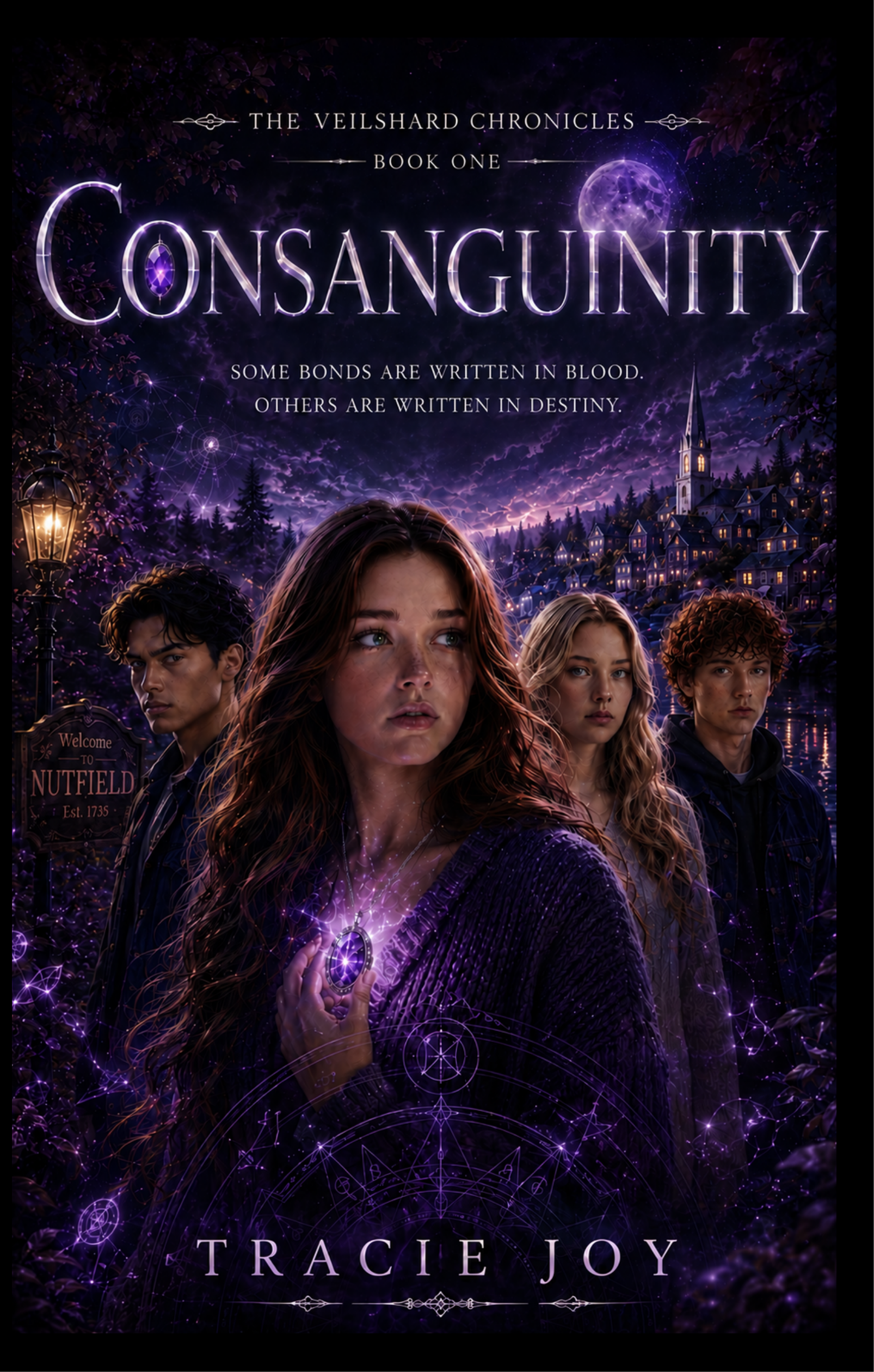
I use this technique throughout my YA paranormal romantasy, Consanguinity. Aisling knows fairly early that something about her life isn’t  quite right. There are dreams. There are people who seem to know things they shouldn’t know. There are connections she doesn’t completely understand. And there are moments when the people around her behave in ways that suggest they know more than they’re telling her.
Instead of immediately explaining everything, the story gives Aisling, and the reader, pieces. A strange interaction here. A warning there. A moment that doesn’t quite make sense yet. Each answer opens another door. That’s intentional. Because I don’t want readers sitting outside the story waiting for Aisling to catch up. I want them standing beside her thinking:
Okay, something is definitely going on here.
And preferably:
I should probably read one more chapter.
See?
Evil.
6. Make Sure You Eventually Pay Off the Mystery
There is one important rule when using the curiosity gap in writing:
Eventually, you have to pay it off.
Readers will happily follow breadcrumbs. They will not happily discover that the breadcrumbs lead directly into a brick wall. If you repeatedly introduce mysteries, questions, or suspicious behavior and never provide satisfying answers, curiosity turns into frustration. Think of each curiosity gap as a tiny promise between you and the reader.
You’re saying:
This matters. Keep reading and I’ll show you why.
You don’t necessarily have to provide the answer immediately. You might not even provide it in the same chapter. But eventually, readers need the payoff.
And ideally?
That payoff creates another question.
7. Try the Curiosity Gap in Your Own Writing
Take a scene from your current project and ask yourself:
What does my reader know right now?
Then ask:
What do they want to know?
If the answer is nothing, you may have found a place where you can create more tension.
Try adding one small unanswered question.
- Maybe someone reacts strangely.
- Maybe an object appears where it shouldn’t.
- Maybe a character avoids answering something.
- Maybe the protagonist realizes two pieces of information don’t quite fit together.
- Maybe someone says something that seems unimportant now but becomes important later.
You don’t need an explosion. You don’t need a murder. You don’t even need a dramatic cliffhanger. Though I do love me a good cliffhanger!
Sometimes all you need is one tiny detail that makes the reader think:
Huh.
That little huh can carry a reader surprisingly far.
Keep Your Readers Wondering
Great storytelling isn’t only about giving readers information. It’s about controlling when they receive it. Give them enough to understand the story. Give them enough to form theories. Give them enough to become emotionally invested. Then leave one little door cracked open.
Because once readers start asking questions, you’ve created something incredibly powerful:
They are participating in the story.
They’re predicting. They’re analyzing. They’re suspicious of everyone. They’re yelling at fictional people who cannot hear them. Which, frankly, is exactly where we want them.
So the next time you’re editing a chapter, don’t only ask:
Is this interesting?
Ask:
What will my reader desperately want to know next?
Then make them turn the page to find out.
Sorry about their bedtime.
Not really.
Want More Help With Your Story?
If you’re working on your own novel and could use a little help developing characters, plotting scenes, or figuring out what happens next, explore my free writing resources. I’ve created worksheets, checklists, plotting tools, and other goodies designed for writers who would rather spend their time actually writing than staring accusingly at a blinking cursor.
And if paranormal mysteries, complicated friendships, strange dreams, hidden connections, and teenagers discovering that absolutely nobody has been telling them the whole truth sound like your kind of thing, keep an eye out for Consanguinity, the first book in The Veilshard Chronicles.