What Is a Book Sell Sheet—and Why Does an Indie Author Need One?
Before we talk about sell sheets and why you, as an author, need said sell sheet (say that three times fast), I want to point out something that I found funny.
Lately, I’ve been publishing blog posts with a theme that runs through the whole week.
This week, I was so focused on my publication drama that I decided no theme. Just wing it.
So, of course, I proceeded to write an entire week’s worth of blog posts that follow the theme:
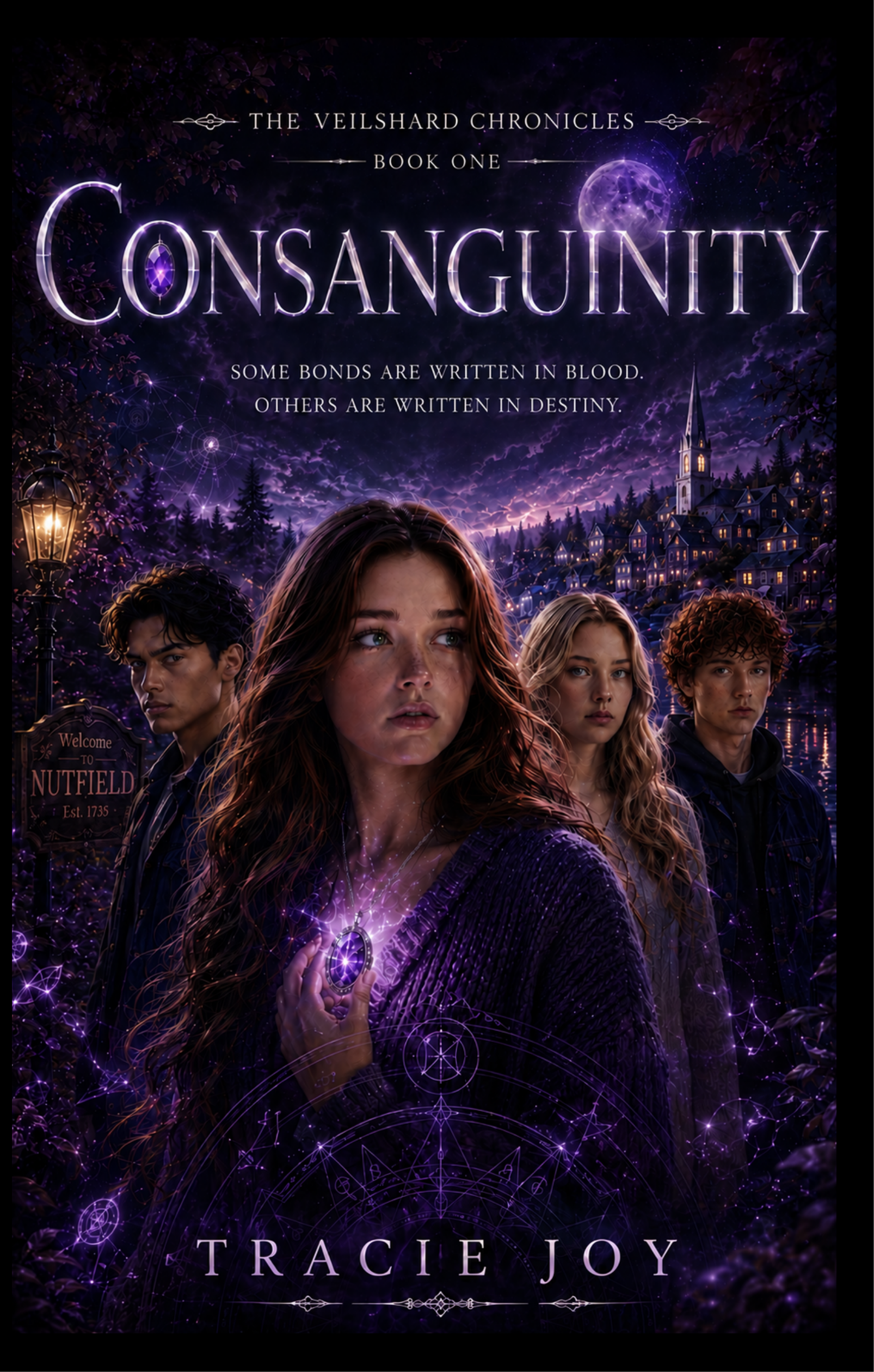
Follow Me on My Adventures in Publishing Consanguinity.
We started with Krakens, Chaos, and Publishing a Book, aka Release the Krakens, in which I learned that apparently  a book does not mean you’re actually finished with the book.
Then came What They Don’t Tell You About Self-Publishing: Mastering KDP and Draft2Digital which featured Tracie losing her ever-loving mind.
Next up was What to Do When Your Book Cover Designer Disappears Into the Fiverr Void, featuring a disappearing Y, a vanished cover designer, and Tracie rescuing the moon.
Because that’s apparently a thing I can do now.
And yesterday we had You Published a Book. Now What?, where all the suggestions were useful, but the most important piece of advice was:
TAKE A NAP.
So much for not having a theme.
And today, our Adventures in Publishing Consanguinity continue with something else I didn’t know I needed until suddenly I needed one:
A sell sheet.
Wait. What the Heck Is a Book Sell Sheet?
That was pretty much my reaction.
A book sell sheet is basically your book’s résumé.
It’s a one-page document that gives bookstores, libraries, booksellers, and other potential buyers the information they 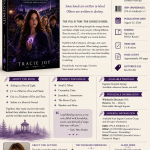 need to decide whether they might want to carry your book.
Not your entire life story. Not a twelve-paragraph explanation of why your book is wonderful. Not you standing at the counter of your local indie bookstore clutching a paperback and saying, Hi, I wrote a thing. Please love it. Although, to be fair, that was approximately Plan A.
A sell sheet lets you walk in looking slightly more like a professional author who understands the publishing industry and slightly less like an excited woman who recently discovered that strangers will actually buy her book.
Progress.
What’s Supposed to Be on a Book Sell Sheet?
The goal is to give someone the important information about your book quickly.
That usually means including things like:
- The book cover
- Title and author
- A short description or sales pitch
- Genre and target audience
- ISBN
- Publication date
- Format
- Page count
- Retail price
- Distributor information
- Wholesale discount and return information, if applicable
- Author website/contact information
- A short author bio
- A QR code or link where the book can be found
Basically, all the questions a bookstore or librarian might ask without making them hunt for the answers. And that last part is important. Because the sell sheet isn’t really about making something pretty. It’s about making someone’s job easier.
Why Would an Indie Author Need a Sell Sheet?
This is the part I hadn’t really considered when I hit Publish. Amazon is easy. Relatively speaking. You upload your book. Amazon puts it on Amazon. People can find it and buy it. But I don’t want Consanguinity to exist only as a tiny thumbnail floating around the internet.
There are independent bookstores near me. There is a library in my town. There are actual physical places where people browse shelves and discover books they weren’t specifically searching for. And I’d really, really like my book to have a chance to be one of them.
That’s where a sell sheet becomes useful.
Instead of walking into a bookstore and expecting someone to stop everything while I explain my book, I can introduce myself, give them the information they need, and let them look at it when they have time.
Which feels considerably less obnoxious.
But How Does a Bookstore Actually Get My Book?
This was another one of those things I hadn’t really thought about.
If I walk into a bookstore with my shiny new sell sheet and they say, Sure, we’d love to carry your book, am I supposed to run home, grab five copies, and bring them back?
Thankfully, no.
This is one of the reasons I decided to make the paperback edition of Consanguinity available through IngramSpark.
IngramSpark combines print-on-demand printing with Ingram’s distribution network, which means bookstores and libraries that order through Ingram can order my book through the same kind of system they already use to order other books.
And here’s the part I find particularly cool:
Print on demand means there doesn’t have to be a warehouse somewhere containing 5,000 copies of Consanguinity.
When copies are ordered, copies can be printed.
For an indie author, that’s huge. I don’t have to pay thousands of dollars upfront for a massive print run and then devote half my house to boxes of books while desperately hoping someone eventually buys them.
I can certainly order author copies to keep on hand for events, signed copies, local sales, or because I occasionally enjoy staring at my own book and thinking, Holy crap. I made that.
But I don’t have to become my own warehouse.
It also explains why information like distributor, wholesale discount, and return status belongs on a sell sheet. A bookseller isn’t only deciding whether your book sounds good. They need to know whether they can actually order it—and under what terms.
IngramSpark has a really useful explanation of print-on-demand book printing and how it works for self-publishers, if you want to dive deeper into that particular publishing rabbit hole.
Because apparently there is always another publishing rabbit hole.
The QR Code Question
Naturally, once I figured out what needed to go on the sell sheet, I immediately found another question to obsess over.
Where should the QR code go?
More specifically:
Where should it SEND people?
My first instinct was Amazon.
But Consanguinity isn’t only available on Amazon.
It’s available through multiple retailers, which means sending everyone directly to Amazon doesn’t make much sense.
So I’m using my Books2Read universal book link. One QR code. One scan. Then the person scanning it can choose the retailer they prefer. For readers, that’s convenient. For a bookstore or librarian looking at the sheet, it also shows that the book has wider distribution and isn’t locked exclusively into Amazon.
Tiny square. Surprisingly useful.
A Sell Sheet Is Not a Poster
This was another distinction I had to wrap my head around.
Because my natural instinct is:
BOOK! PRETTY! COVER! MAGIC! MAKE GRAPHIC!
But a sell sheet has a job. It can absolutely look good. In fact, it should look polished and reflect the book’s branding. But somebody should be able to glance at it and immediately find the ISBN, price, distributor, genre, and contact information. If they’re searching through decorative vines, moonlight, seventeen fonts, three glowing necklaces, and an inexplicable raven to find the ISBN, I have perhaps lost the plot.
And yes, I am saying this primarily to myself.
Yet Another Thing I Didn’t Know I Didn’t Know
That may be my biggest lesson from self-publishing. It isn’t simply that there’s a lot to learn. It’s that you don’t even know which questions you’re supposed to be asking until suddenly you need the answer.
A few months ago, I was worried about finishing the manuscript. Then I was worried about editing, formatting, ISBNs, distribution, covers, ARCs, marketing. Then apparently the letter Y declared war on me. Don’t ask. It was a thing. I won.
And now?
Sell sheets.
 Every stage reveals another little piece of the publishing business I didn’t know existed. But here’s the strange part: I’m actually enjoying learning it. Okay, maybe not all of it. The Freaking Y can still go straight to hell.
But this part?
Figuring out how to take something I wrote at my desk and get it into the hands of actual readers—and maybe even onto the shelf of an actual bookstore?
That’s pretty freaking cool.
So now I have another item for the self-publishing checklist:
Write the book.
Publish the book.
Make the sell sheet.
And then, apparently, gather up my courage and walk into some bookstores.
I’ll let you know how that goes.
Want to Make Your Own Book Sell Sheet?
If you just read all of that and thought, Okay, great, Tracie. Now I know I need a sell sheet—but I still have to MAKE one?
I’ve got you.
I created a free Book Sell Sheet Template for indie authors with spaces for all the important stuff: your book cover, description, ISBN, pricing, distribution information, author bio, QR code, and more.
You can grab whichever version works best for you:
👉 [Download the Editable Word Template]
👉 [Free_Book_Sell_Sheet_Template]
Add your book information, swap in your cover and QR code, delete my little instructions, and you’re ready to introduce your book to bookstores, libraries, and anyone else who might want to put it on a shelf.
Because apparently publishing the book wasn’t enough work.
At least this part I can make easier for you. 💜